






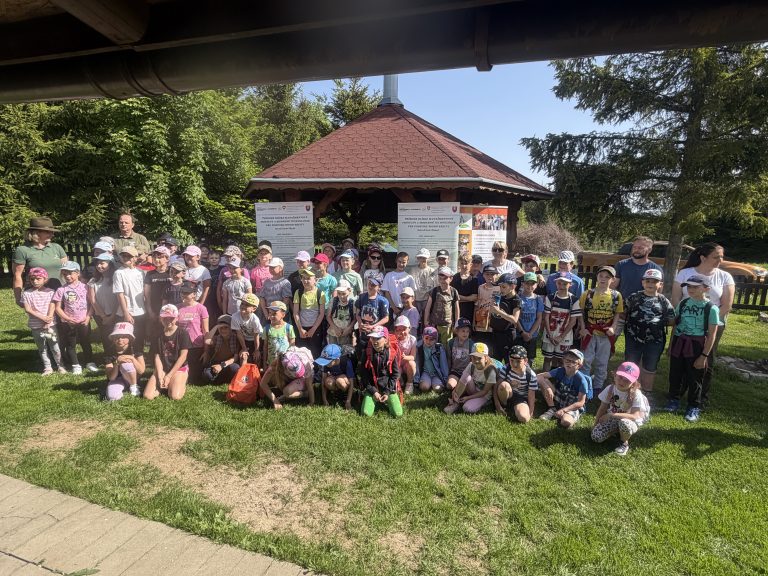
Im Rahmen des SilvaTech4Trees-Projekts in Spišská Belá wurden die Schüler durch erfahrungsorientiertes Lernen an die Forstwirtschaft herangeführt
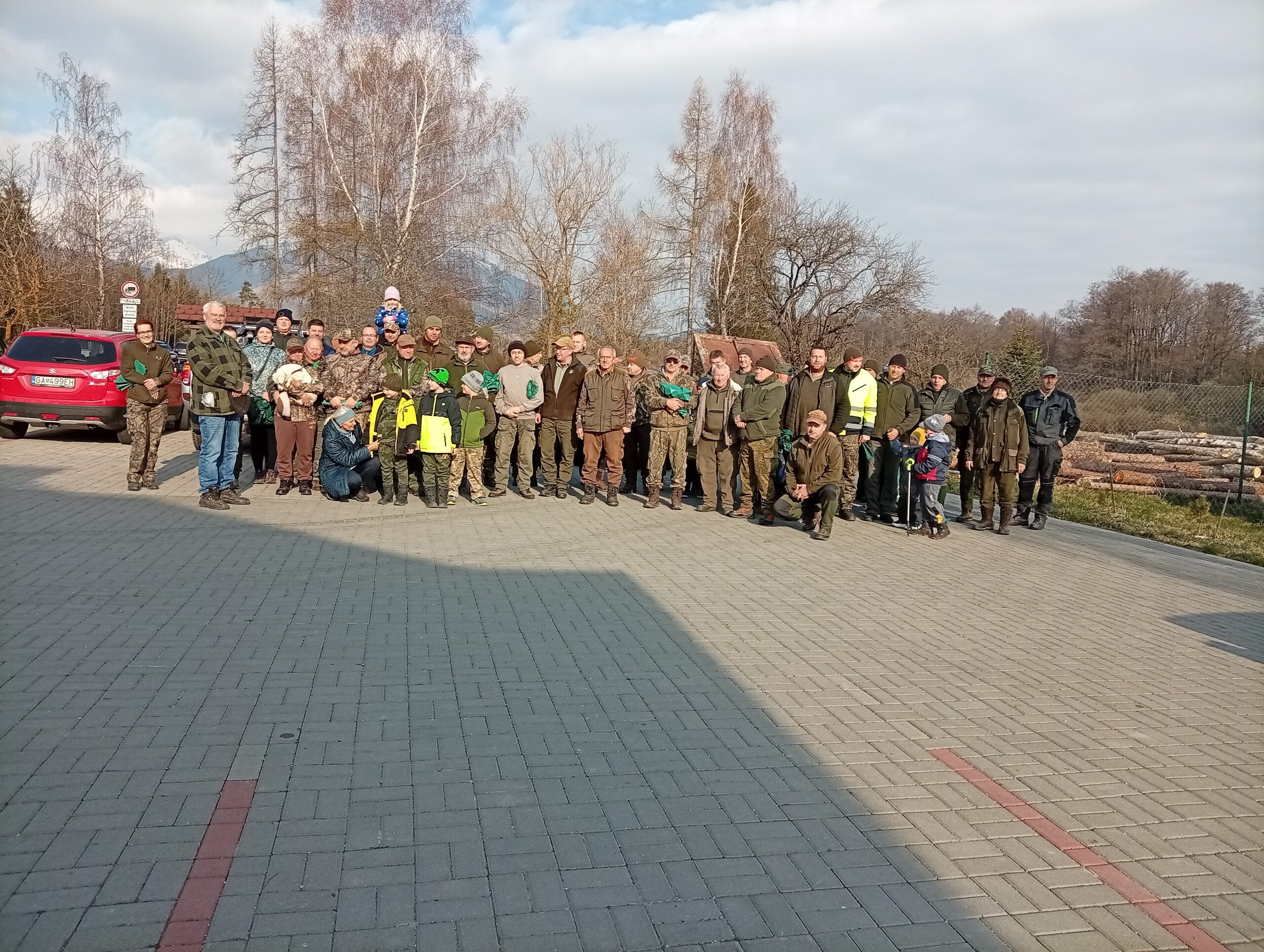
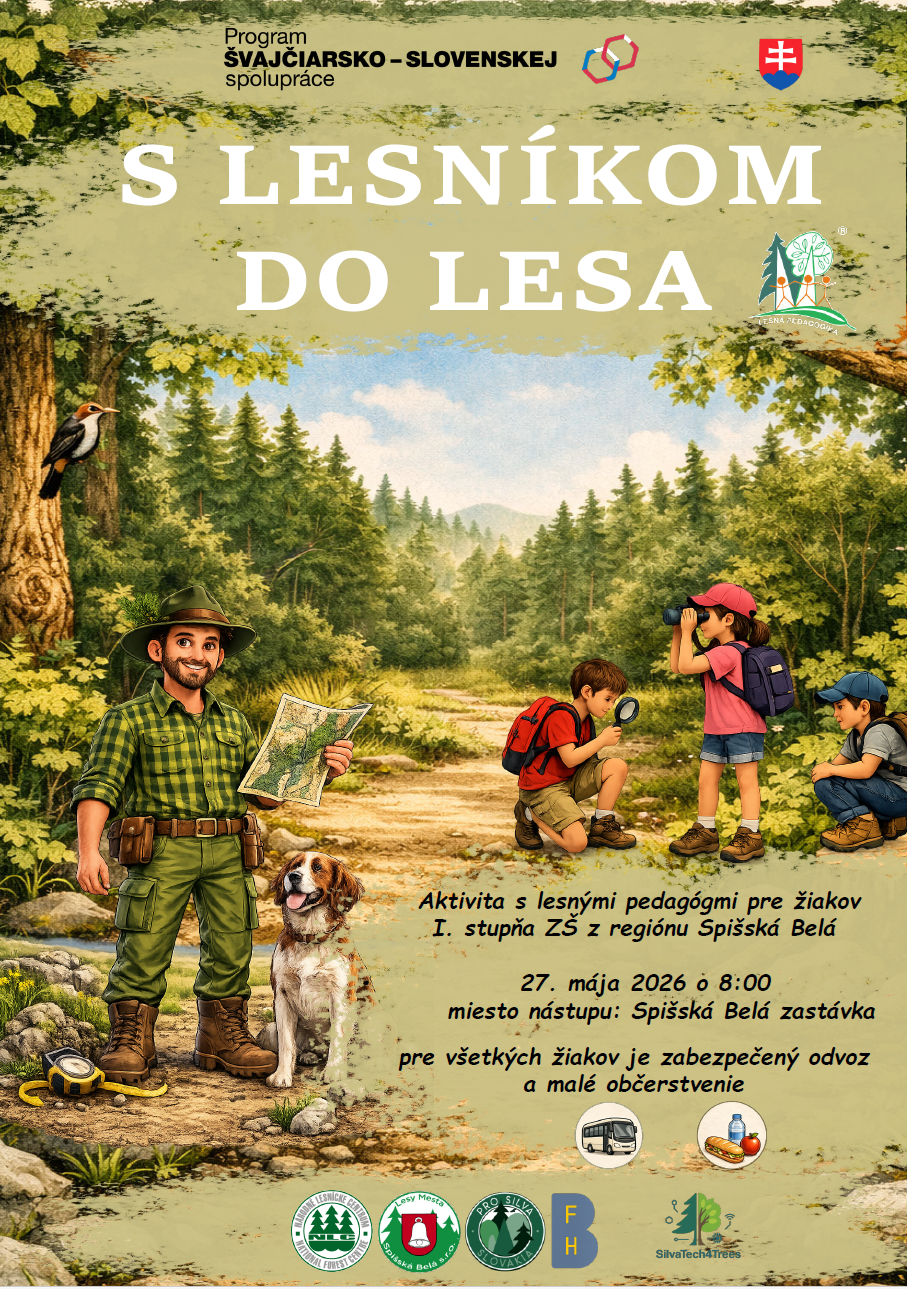
Am 27. Mai 2026 findet eine Veranstaltung mit dem Titel „Mit dem Förster in den Wald“ in Spišská Belá als Teil des SilvaTech4Trees-Projekts, das sich an Grundschüler aus der Umgebung richtete. Im Mittelpunkt der Veranstaltung standen Umweltbildung und Waldpädagogik sowie die Vermittlung der Bedeutung der Forstwirtschaft für Kinder durch praktische Vorführungen und erlebnisorientiertes Lernen.
Das Programm wurde von Waldpädagogen des Zentrums für Wissensvermittlung und Waldpädagogik des Nationalen Waldzentrums ausgearbeitet. Sie führten die Schüler auf spielerische und interaktive Weise an den Wald, seine Funktionen, die Bedeutung des Schutzes von Waldökosystemen sowie die Arbeit der Förster heran. Achtzig Schüler nahmen an der Veranstaltung teil.
Auf dem Programm standen zudem Vorführungen zur Falknerei sowie Zugpferde, die beide historisch und praktisch mit der Forstwirtschaft verbunden sind. Dies bot den Schülern die Gelegenheit, nicht nur etwas über moderne Ansätze der Waldbewirtschaftung zu erfahren, sondern auch über traditionelle Tätigkeiten, die ein fester Bestandteil der Forstwirtschaft sind.
Während der Veranstaltung wurden den Teilnehmern leichte Erfrischungen angeboten.
Die Veranstaltung in Spišská Belá trug dazu bei, das Umweltbewusstsein der Schüler zu stärken und ein besseres Verständnis für die Bedeutung der Wälder, der Forstwirtschaft, der Artenvielfalt sowie der Arbeit der Menschen, die sich um unsere Wälder kümmern, zu fördern.


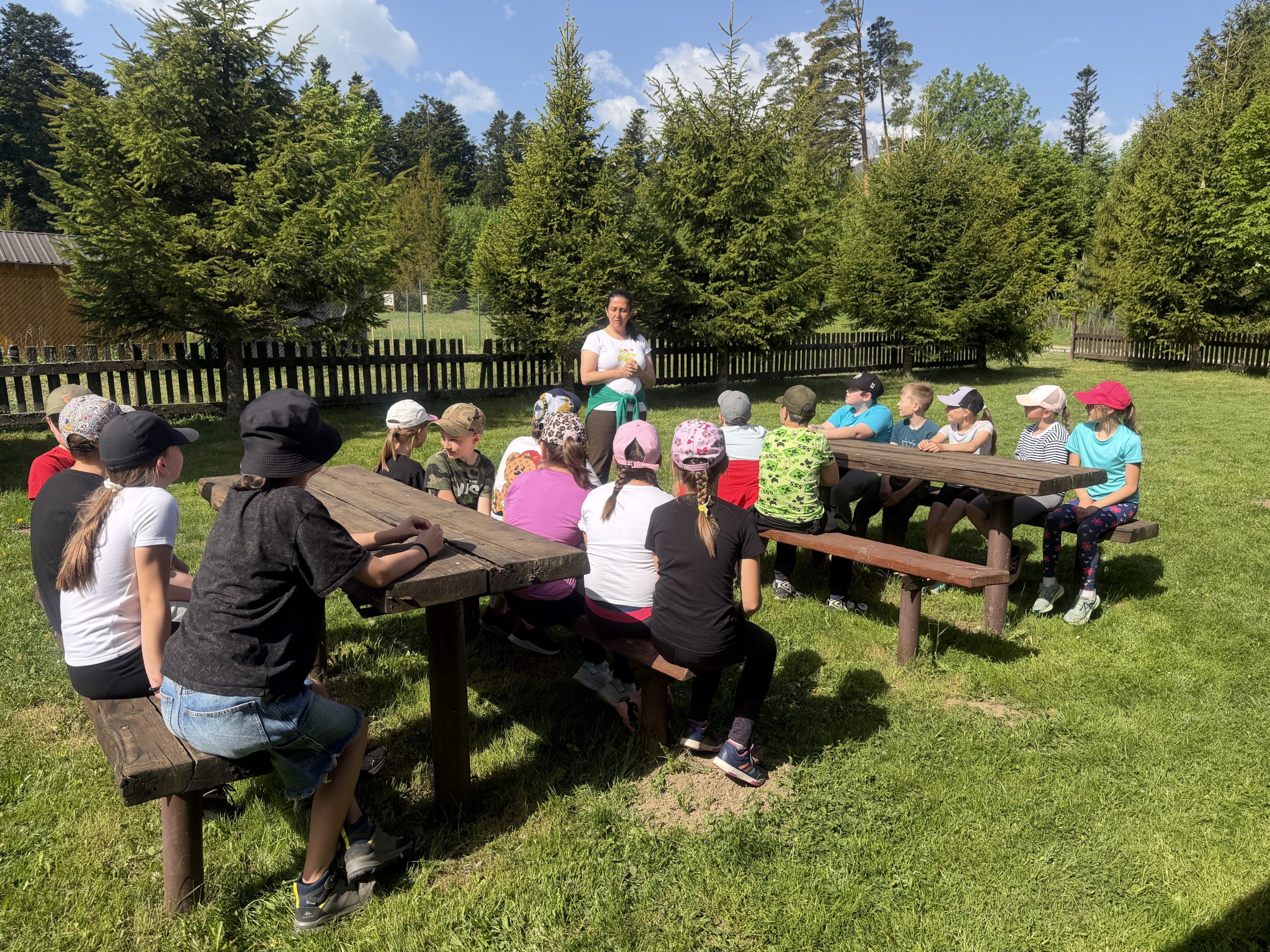


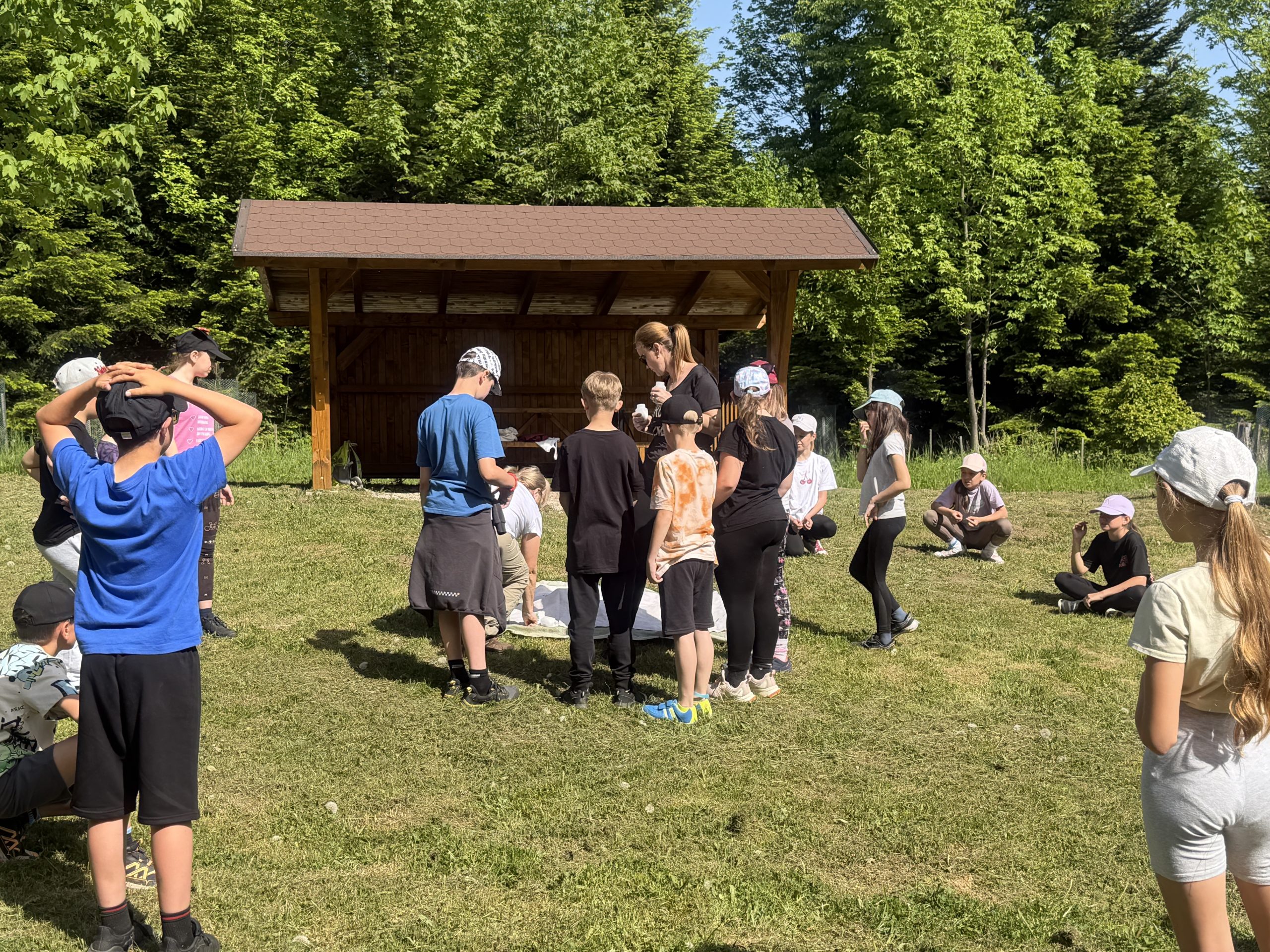
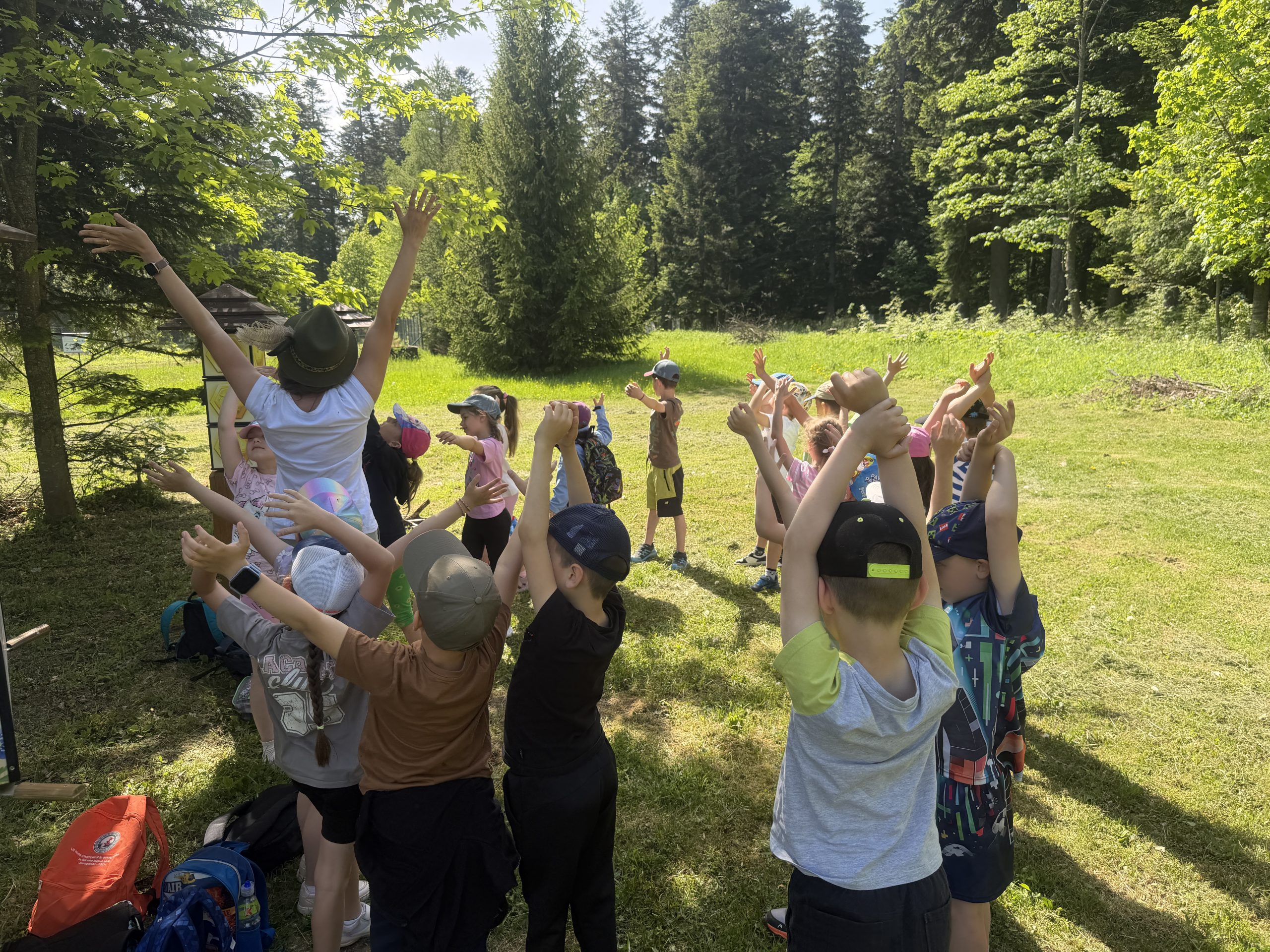

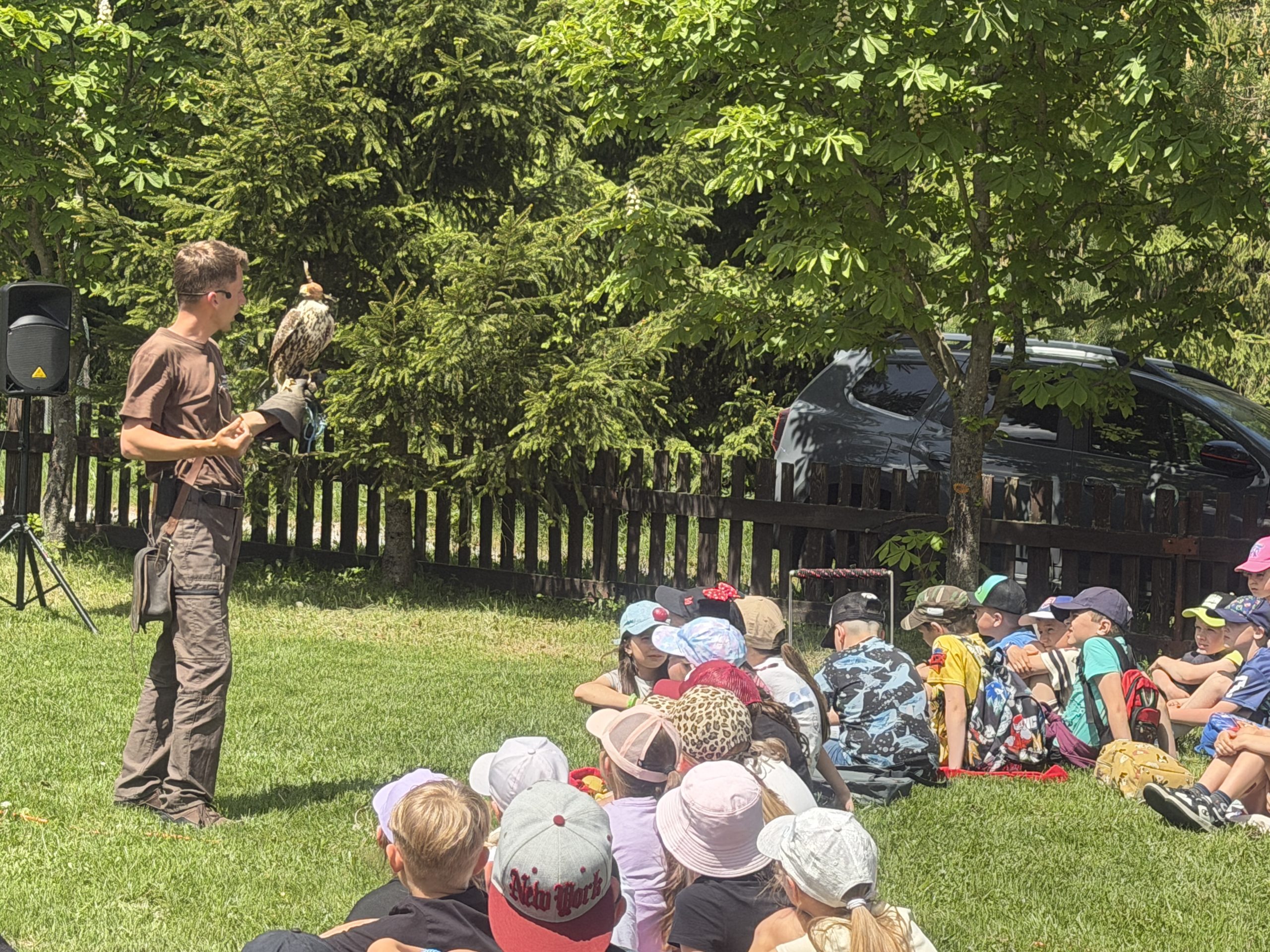
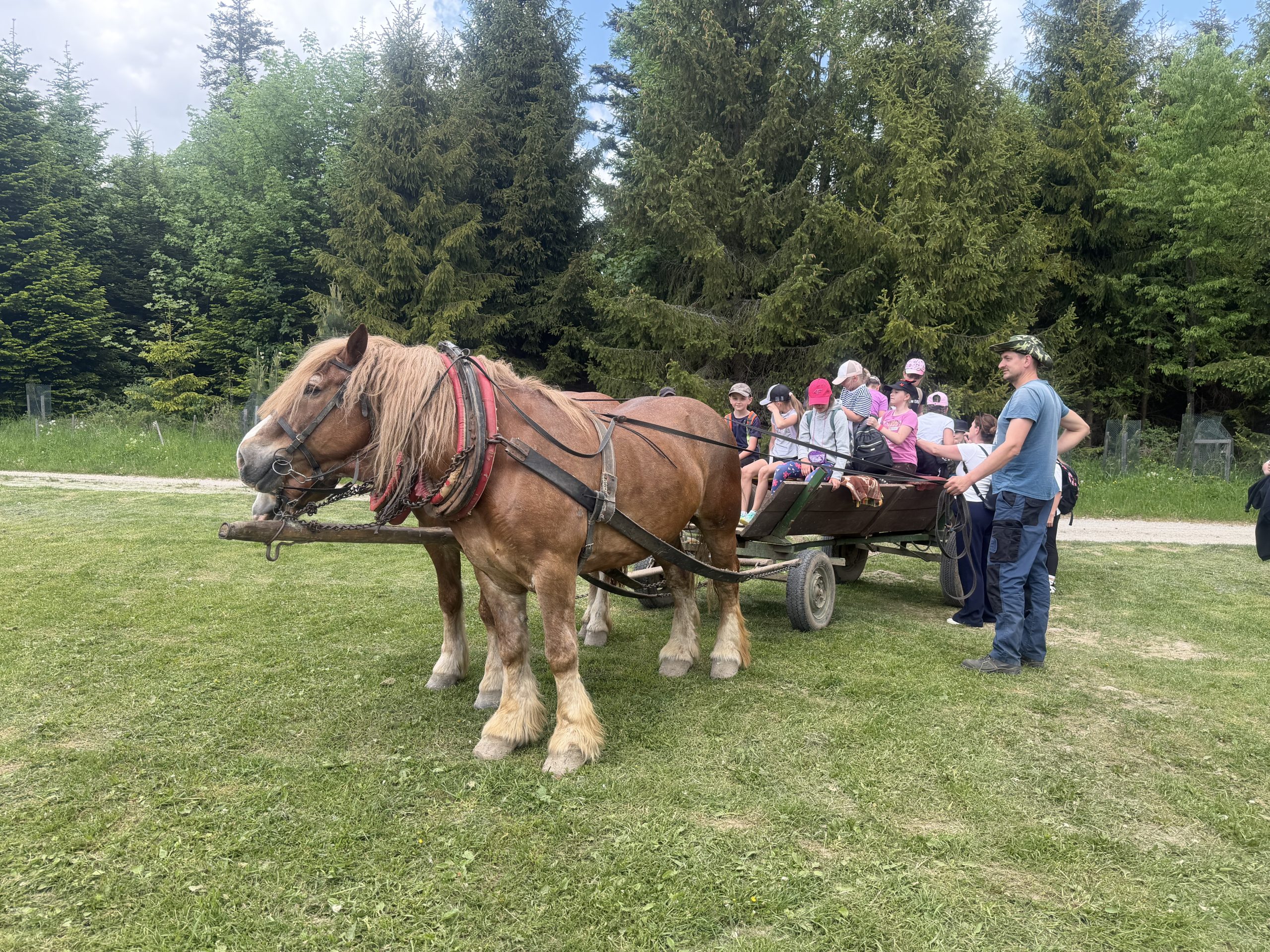
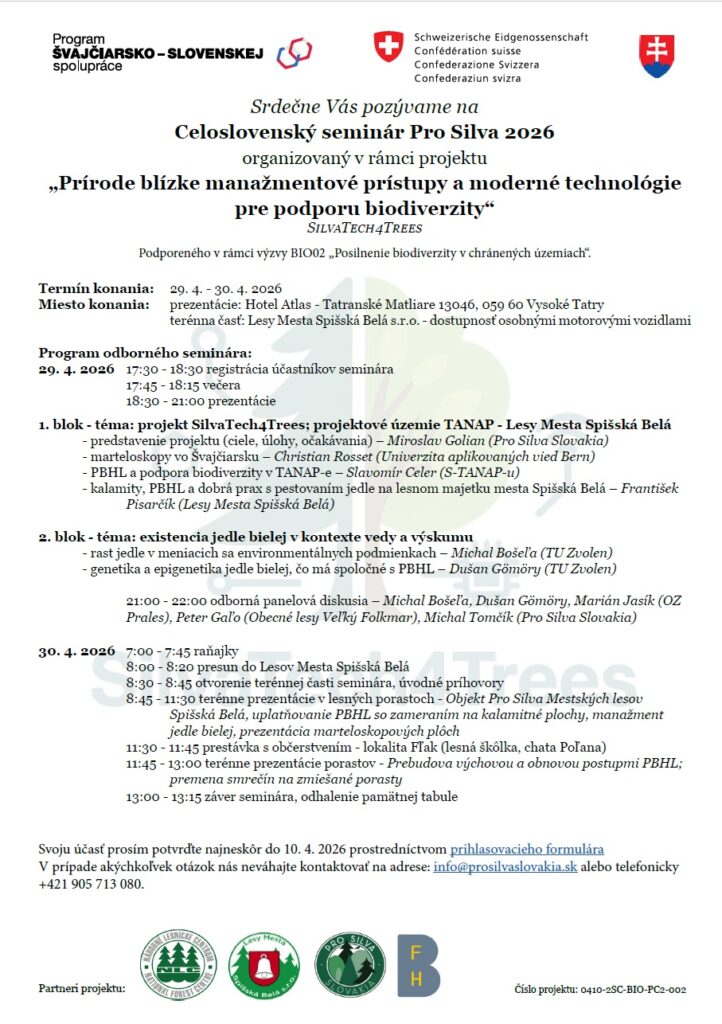
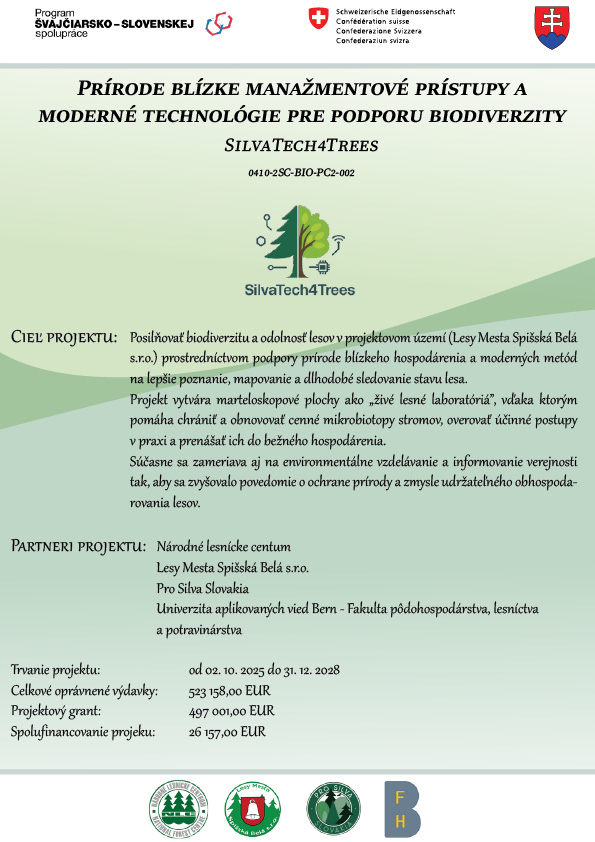
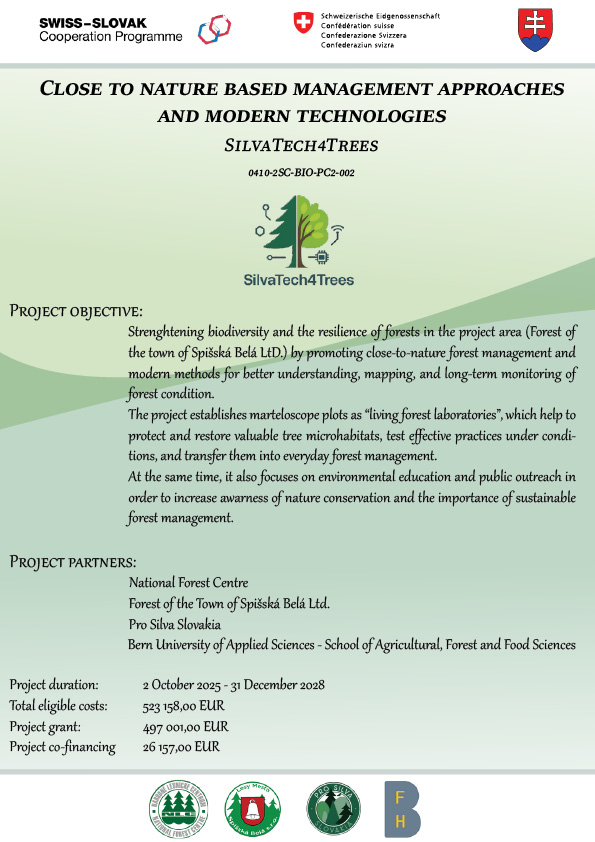
Einladung zur Veranstaltung „Mit dem Förster in den Wald“ – Archiv
Über das Projekt:
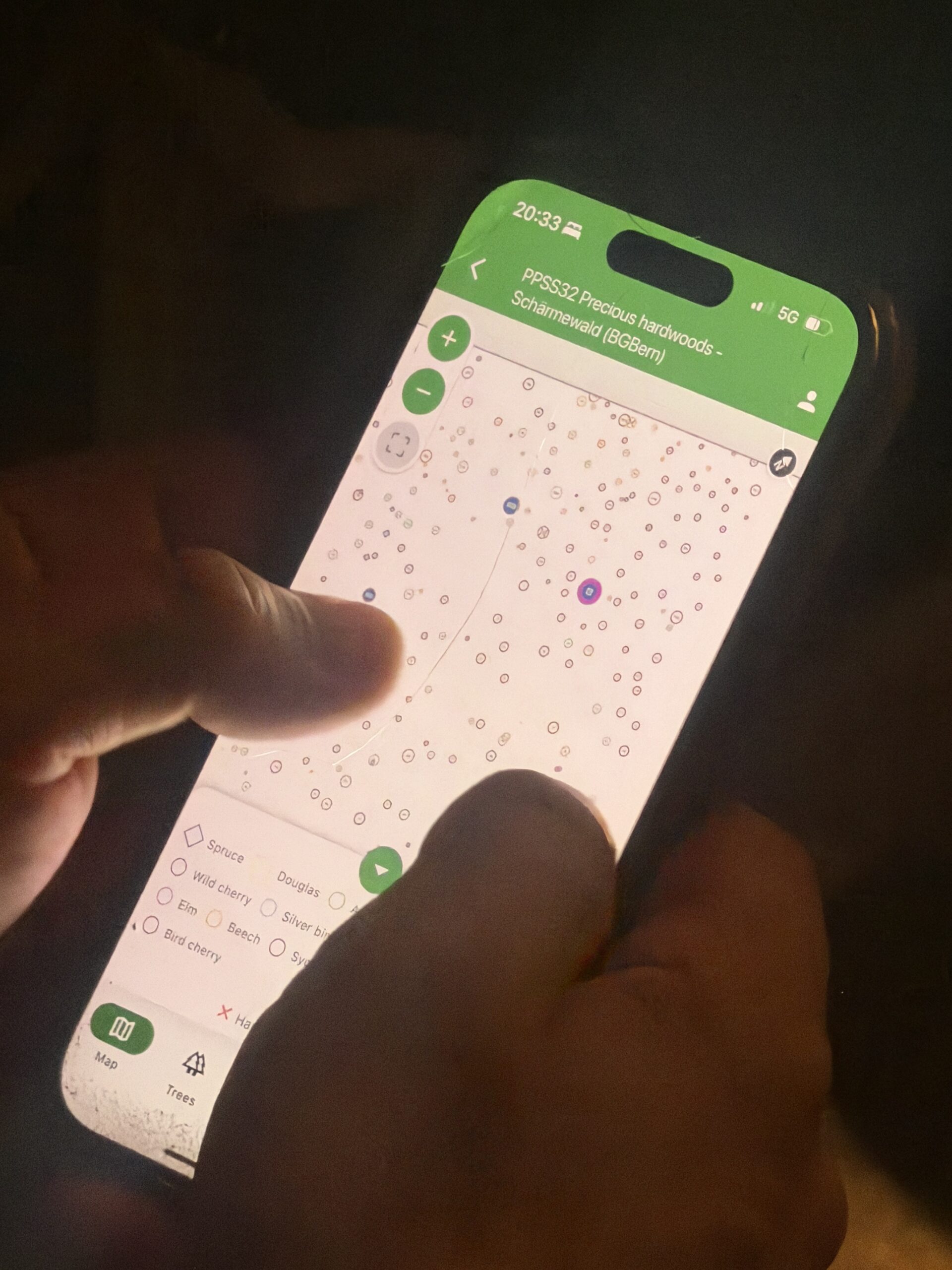
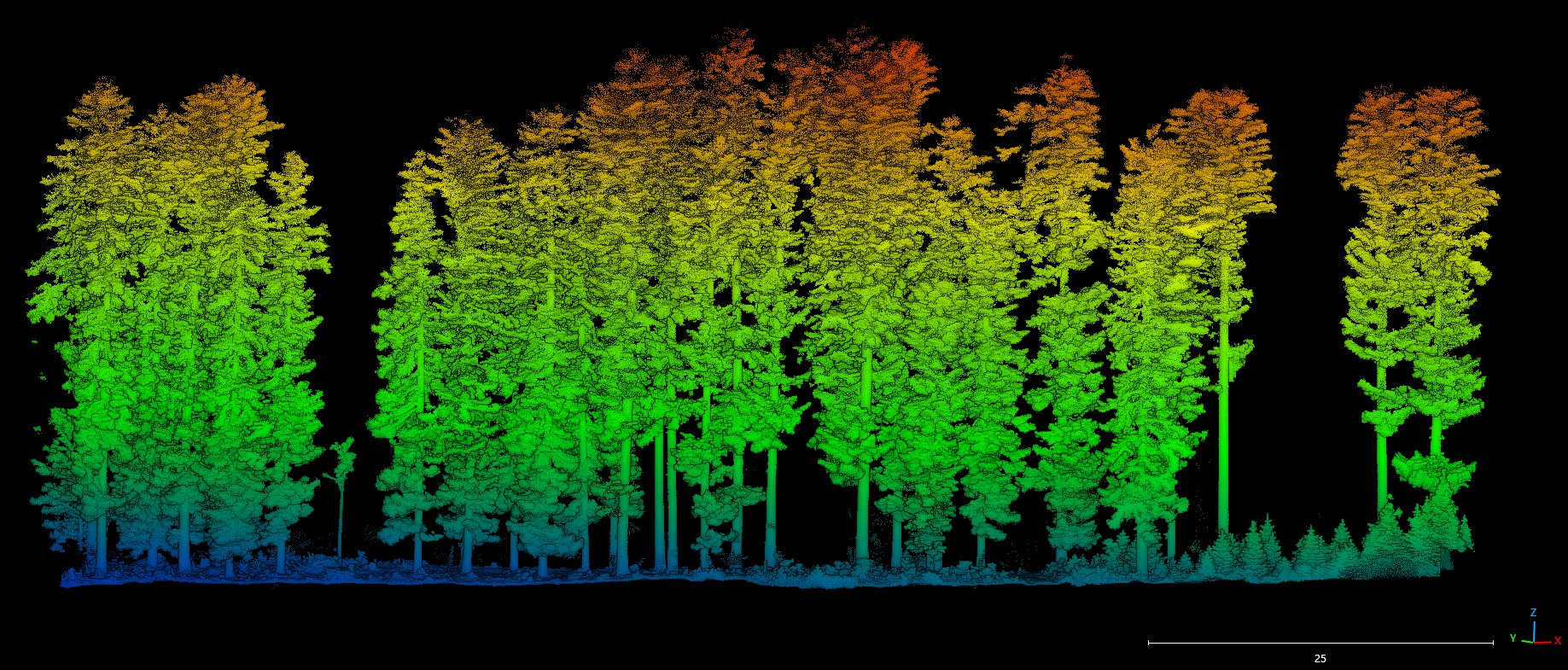
Im Mittelpunkt der Projektaktivitäten steht die Verbesserung der Lebensraumbedingungen durch eine naturnahe Waldbewirtschaftung in Schutzgebieten. Im Projektgebiet werden Felduntersuchungen unter Einsatz moderner Technologien (z. B. Laserscanning) durchgeführt, um Baum-Mikrohabitate und die Waldstruktur zu überwachen und so fundierte Bewirtschaftungsentscheidungen zu ermöglichen.
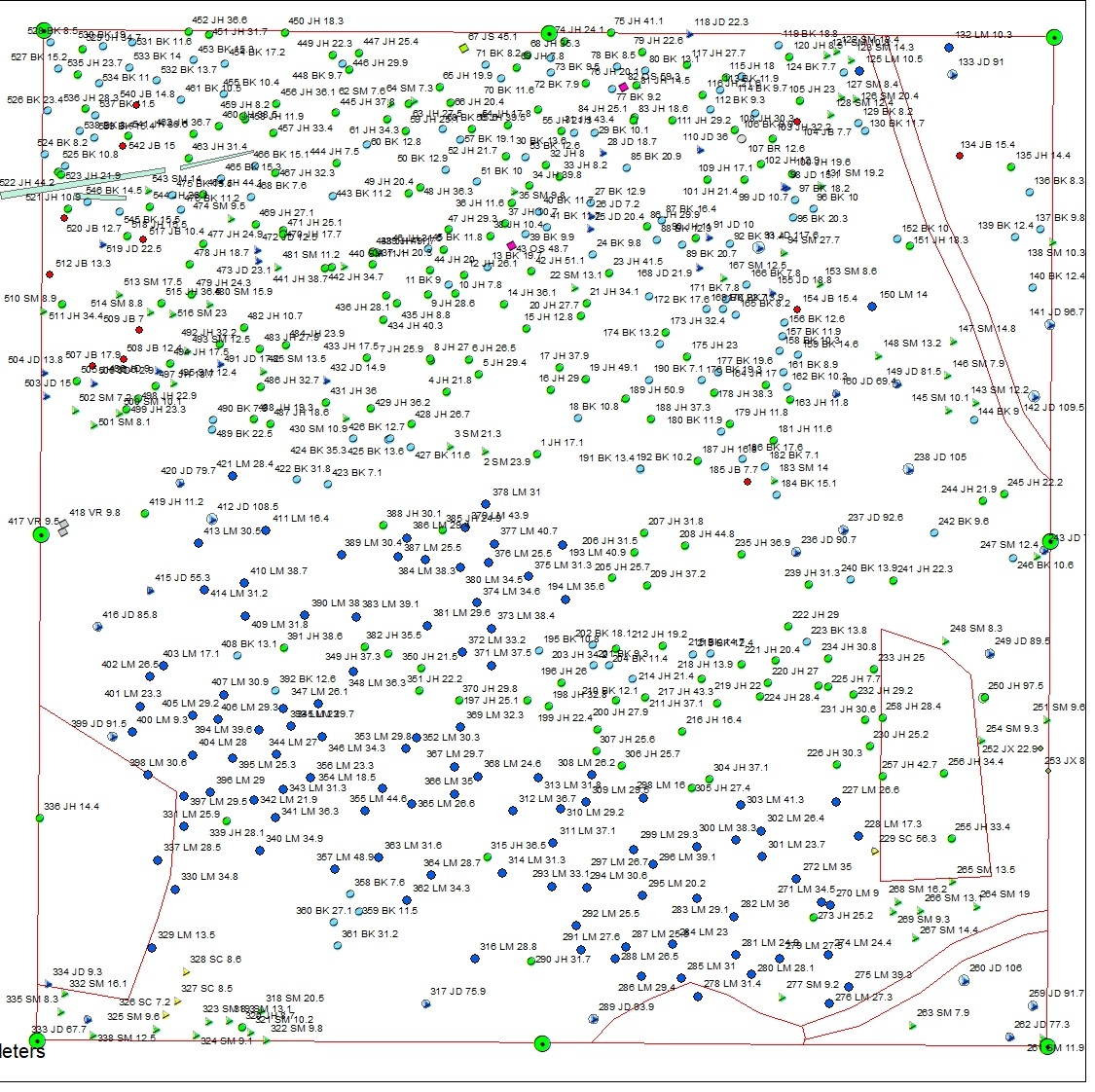
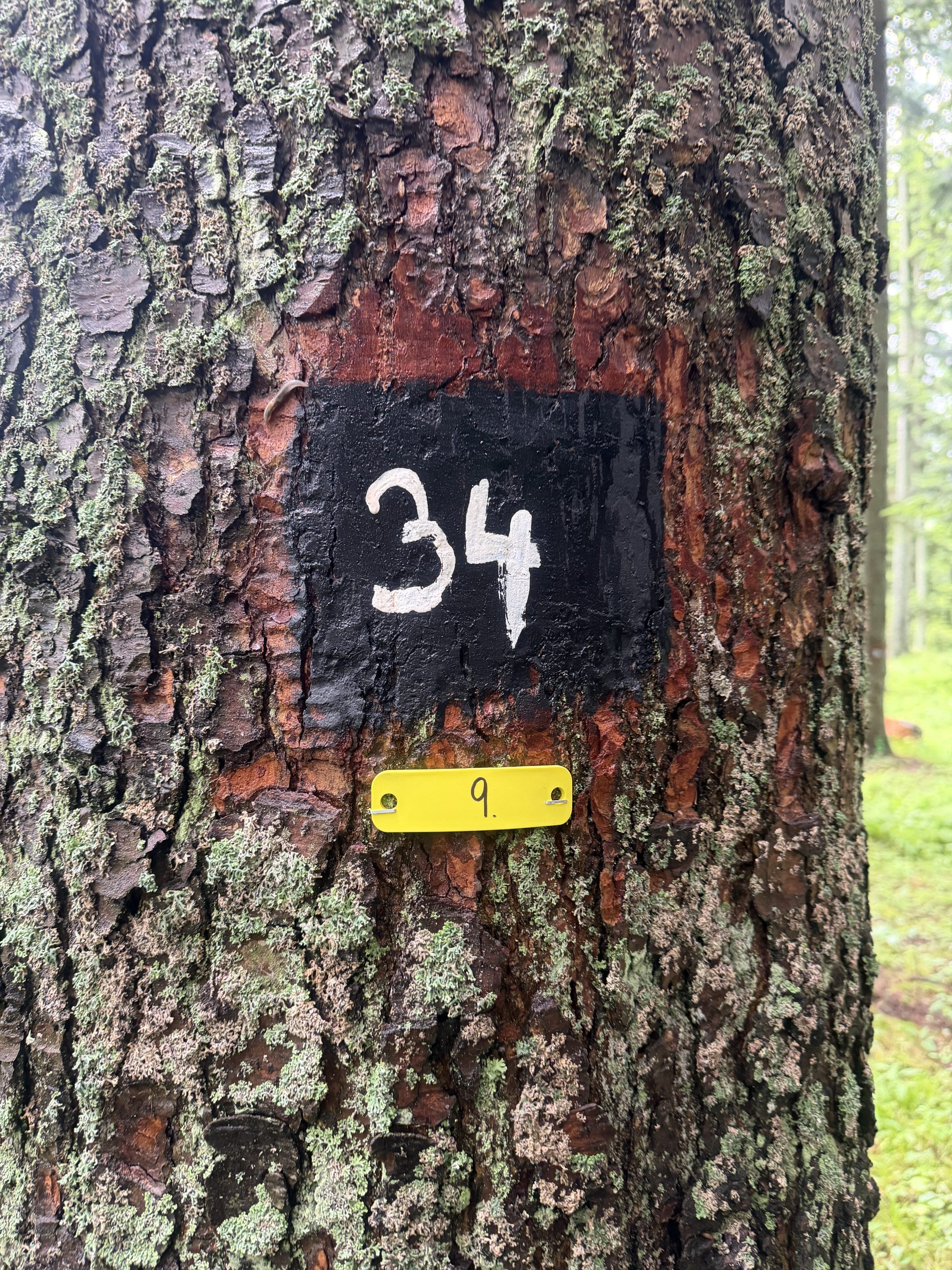
Im Zielgebiet werden Marteloscope-Versuchsflächen als „lebende Waldlabore“ eingerichtet, um Maßnahmen zur Förderung der Artenvielfalt langfristig zu erproben.
Warum tun wir das?
- die Widerstandsfähigkeit der Ökosysteme gegenüber dem Klimawandel zu stärken und einheimische Baumarten zu fördern
- präzisere Überwachung und Entscheidungsfindung im Management (Laserscanning, RFID, ARBOTON)
- Wissensvermittlung und Umweltbildung sowohl für Fachleute als auch für die breite Öffentlichkeit